

If you’re inside an AI procurement RFP this week, your competitive landscape just changed in a way that has nothing to do with the technology. Anthropic, Blackstone, Hellman & Friedman, and Goldman Sachs announced a new AI-native enterprise services firm this week,1 capitalized at $1.5 billion per Bloomberg’s reporting,2 with engineers from Anthropic embedded directly inside client operations across healthcare, manufacturing, financial services, retail, real estate, and infrastructure.1 OpenAI is reportedly pursuing the same structure with TPG and Bain Capital,3 so this is not a one-off Anthropic move. The platform vendor is now also the integrator and the consultant. That’s news.
But it’s not the news you should be focused on.
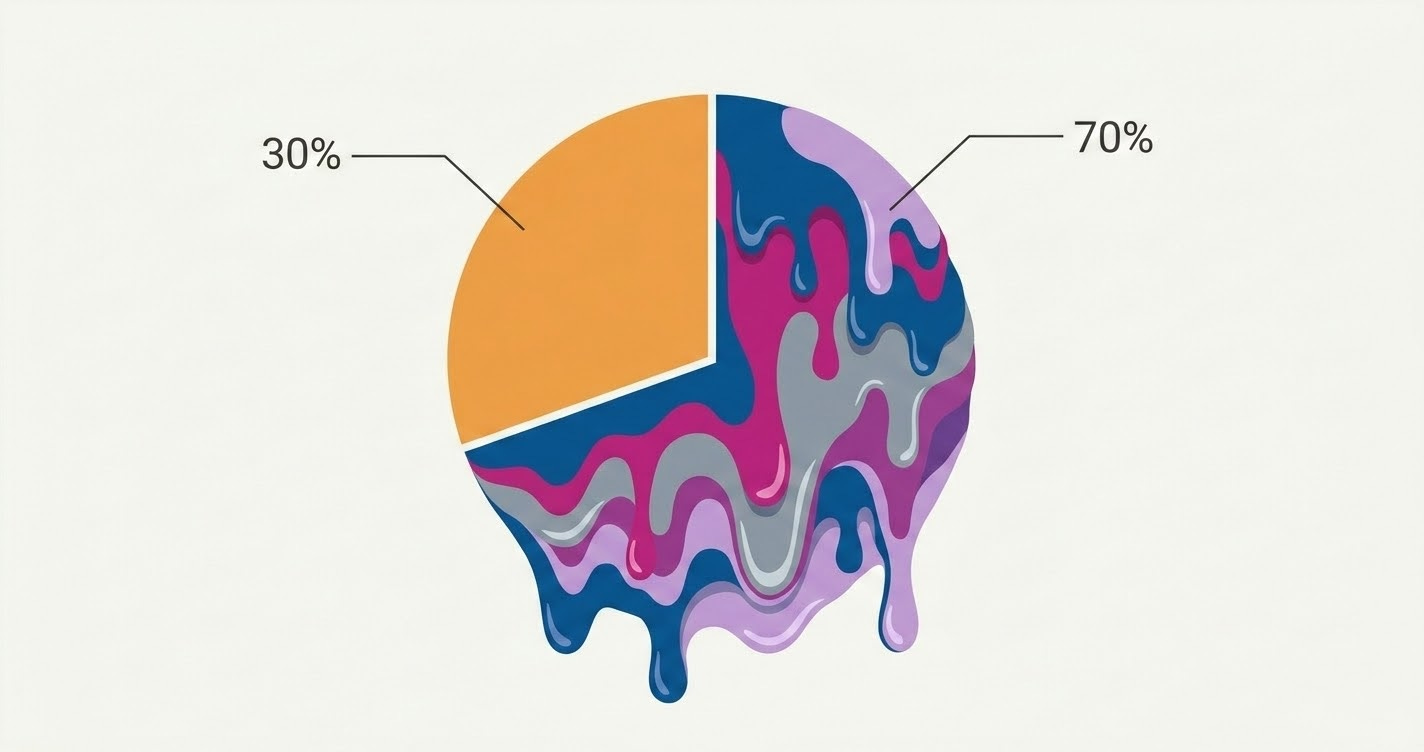
Here’s the news. Every dollar your company invests in AI splits roughly 30/70: about thirty cents on technology and infrastructure, seventy cents on people, organization, and process. That’s BCG’s research, and it has held across every major enterprise AI study for two years.4 The new joint venture is engineered to capture the thirty cents brilliantly—embedded engineers, Anthropic’s research team alongside, vertical specialization, scale. What it is not engineered for is the seventy. That part is your job, and right now most companies do not have a role responsible for it.
What just changed in your procurement
For a generation, an enterprise software engagement assumed three vendors: a platform vendor for the tools, a systems integrator to deploy them, and a management consultant to translate strategy across the gap. Microsoft, AWS, Salesforce, and Oracle sold the platforms. Accenture, Deloitte, and the Big Four implemented them. McKinsey, BCG, and Bain handled the strategy translation. Three vendors, three contracts, three sets of incentives. Each had a specific job, and each had to coordinate with the other two for the engagement to work.
That geometry just collapsed. After this week, Anthropic owns both the model and the delivery. Your AI procurement RFP next quarter will, increasingly, be a single-vendor decision rather than a three-vendor coordination problem. That sounds like simplification—fewer contracts, fewer SOWs, fewer steering committees. In practice, it means the workforce-impact assessment that used to live with the consultant or the integrator now sits inside a delivery proposal optimized for the platform’s economics.
A counterargument is worth surfacing here. Most procurement teams already include workforce-impact assessment in their AI RFPs. The issue is sequence. When platform vendor, integrator, and consultant collapse into one, that assessment runs against a delivery proposal already optimized for the vendor’s economics—not for the workforce that will run the platform. The assessment becomes ratification, not architecture. Ratification is what lets vendor economics quietly shape the workforce decisions you thought you were making.
Every AI dollar splits 30/70—about thirty cents on technology and infrastructure, seventy cents on people, organization, and process. The seventy is your decision.
The 70 cents at risk
Look at what happens when the seventy cents goes uncaptured.
Deloitte’s 2026 State of AI shows workforce AI access has roughly doubled to about 60% in a year—but only 25% of leaders report the impact has been transformative.5 The 35-point gap between access and transformation is, in plain terms, what happens when the tools land but no one has redesigned the work around them. Tools deployed, value not converted. That gap is the seventy cents that disappeared.
Gartner’s April 2026 data names the operational symptom: only 28% of AI infrastructure projects deliver promised ROI, and 38% of those failures trace specifically to skill gaps.6 Skill gaps are not training shortfalls; they are workflow shortfalls. The right team, given the wrong workflow, fails. WRITER’s 2026 enterprise study finds 54% of C-suite leaders say AI adoption is “tearing their company apart.”7 When you read that headline, you might think: people don’t like change. The data says something more profound. Half of the C-suite is watching their teams work inside workflows the AI redesigned without anyone redesigning the work around the people who do it. That is the seventy cents leaking out as a culture quietly coming apart at the seams.
The talent line is the third one to watch. McKinsey’s April 2026 future-of-work data is where it shows up: AI heavy users—the people unlocking the most value inside the enterprise—are 7 to 10 percentage points more likely to plan to quit in the next three to six months.8 The reason is consistent across the surveys. Heavy users hit a ceiling when the workforce side of the integration is under-designed. They were the ones who could have unlocked the next layer of value, but the architecture didn’t let them. They leave to find a place where it does. Replacing them costs more than building the right architecture would have.
If you have no voice in how your people work after the integration, you cannot compound the return on the investment.
What the workforce transformation architect actually does
Most enterprises do not have an internal architecture to capture the seventy cents. They have an HR function built to hire people, an IT function built to ship systems, and an executive committee that meets monthly to discuss things HR and IT have already decided. None of those bodies is structured to design how human work changes when the AI vendor and the integrator are the same firm.
Three things have to be true for the role to actually exist.
First, the role must have a name and an executive owner. Often a CHRO with a strategy background; sometimes a chief transformation officer; sometimes an outside advisor with no integration revenue at stake. The criterion is not seniority—it is whether the person can hold a workforce-design line through a vendor-led implementation. If they can be overruled by procurement velocity, the role is decorative.
Second, the workforce-design brief must come before the procurement contract, not after. Two pages. Names the work the AI is meant to change, the human roles that change with it, the retention and progression intent, the workflows that must remain legible to managers post-deployment. The vendor responds to the brief—not the other way around.
Third, vendor compensation must tie to a workforce-retention or operating-model KPI, not just technical milestones. The platform vendor is paid for usage. The integrator is paid for integration depth. If no contract line is paid for whether your people are still in the building in three years, no one in the room is structurally responsible for it.
An executive who cannot be overruled by procurement velocity is the only person who can capture the seventy cents.
How two banks already built the role
This isn’t theoretical. Two of the largest financial institutions in the world have already built it.
Take JPMorgan Chase. Their CIO, Lori Beer, manages a 2026 technology budget of $19.8 billion and a workforce of 65,000 technologists. CEO Jamie Dimon went on record in February with what he called “huge redeployment plans” for workers whose jobs AI is changing. The bank is holding total headcount steady at about 318,500. They trimmed operations roles by 4%, support functions by 2%, and offset both by expanding client-facing and revenue-generating teams by 4%.9,10 People are not leaving the building. The work is being redesigned, and people are being moved to where the work now lives. That is the workforce transformation architect role in action, even if JPMorgan does not call it that.
Take BBVA. Eighteen months into a sustained AI deployment, Elena Alfaro—the bank’s head of global AI adoption—has more than 11,000 active users inside the bank, and those users have built 4,800 custom internal tools.11 Harvard Business Review named BBVA a benchmark for corporate AI adoption.12 Notice what’s interesting: the 4,800 tools were not specified by a vendor RFP. They were built by the people whose work the tools were meant to change. BBVA designed the human side of their AI environment first—competitive scarce access, a peer-driven expert network, sanctioned authority to build inside the perimeter—and that design produced the tools. Not the other way around.
These two companies built something the rest of the market will be pricing into senior-talent compensation by the end of 2027.
The architecture you build now is the retention plan you do not have to write later.
When you sit down to evaluate the next AI engagement, the question is no longer “which platform” or “which integrator.” Those are bundled. The question is who in your organization is paid to capture the seventy cents the vendor’s economics will not. If the answer is “nobody named yet,” the workforce-design brief becomes the procurement artifact you write before the RFP—not the impact assessment you sign after.
Models get updated. Engineers rotate. Workforce design becomes the operating model.
The AI Leadership Playbook
Strategic Questions
When we evaluate AI implementation partners this quarter, what criteria are we using to assess workforce-design implications—separately from the technical scope? What is the first change we have to make if those criteria are missing?
Of the three roles in our next AI engagement—platform vendor, integrator, workforce transformation architect—which one are we treating as a vendor decision, and which one are we treating as a strategy decision? Where do those two decisions get reconciled?
If our implementation partner has economic incentives to expand model usage, who is responsible for representing the long-term workforce interest, and is that person in the room when scope is defined? If they are not, what is the procurement decision that puts them there?
Your Next Plays
Designate the workforce transformation architect role before the procurement decision. The criterion is not seniority—it is whether the person can hold the workforce-design line through a vendor-led implementation. Often a CHRO with a strategy background, sometimes a chief transformation officer, sometimes an outside advisor with no integration revenue at stake.
Separate workforce design from technical scope of work in the RFP. Two documents, two sign-off paths, two distinct review milestones. Bundling them is what lets vendor economics silently shape workforce decisions.
Tie a portion of vendor compensation to a workforce-retention or operating-model KPI—not just technical milestones. The platform vendor is paid for usage. The integrator is paid for integration depth. If no contract line is paid for whether your people are still there, no one in the room is structurally responsible for it.
Test out these plays and let us know in the comments what you learned and how you improved on our plays for your organization.
📅 Book a complementary 1:1 Strategy Session—45 minutes to map your AI transformation sequence.
STRATEGIC INFLECTION WEEK · READING ORDER
📬 Free preview ending soon. Subscribe to continue getting decision-grade AI intelligence that prepares you to move before your competitors do. First 100 subscribers receive bonus content. Subscribe to The AI Playbook.
Sources
1. Blackstone press release, “Anthropic Partners with Blackstone, Hellman & Friedman, and Goldman Sachs to Launch Enterprise AI Services Firm,” May 2026. https://www.blackstone.com/news/press/anthropic-partners-with-blackstone-hellman-friedman-and-goldman-sachs-to-launch-enterprise-ai-services-firm/
2. Bloomberg, “Goldman, Blackstone Partner With Anthropic on AI Services Firm,” May 4, 2026. https://www.bloomberg.com/news/articles/2026-05-04/goldman-blackstone-partner-with-anthropic-on-ai-services-firm
3. TechCrunch, “Anthropic and OpenAI are both launching joint ventures for enterprise AI services,” May 4, 2026. https://techcrunch.com/2026/05/04/anthropic-and-openai-are-both-launching-joint-ventures-for-enterprise-ai-services/
4. BCG, “Reinvention of the CHRO in an AI-Driven Enterprise,” February 2026. https://www.bcg.com/publications/2026/reinvention-of-the-chro-in-an-ai-driven-enterprise
5. Deloitte, “State of AI in the Enterprise 2026.” https://www.deloitte.com/us/en/what-we-do/capabilities/applied-artificial-intelligence/content/state-of-ai-in-the-enterprise.html
6. Gartner press release, “AI Projects in Infrastructure and Operations Stall Ahead of Meaningful ROI Returns,” April 7, 2026. https://www.gartner.com/en/newsroom/press-releases/2026-04-07-gartner-says-artificial-intelligence-projects-in-infrastructure-and-operations-stall-ahead-of-meaningful-roi-returns
7. WRITER, “Enterprise AI Adoption 2026.” https://writer.com/blog/enterprise-ai-adoption-2026/
8. McKinsey, “How AI is—and isn’t—changing the future of work,” April 6, 2026. https://www.mckinsey.com/capabilities/people-and-organizational-performance/our-insights/how-ai-is-and-isnt-changing-the-future-of-work
9. Fortune, “How JPMorgan’s CIO Is Reshaping Work at the Bank with a $19.8 Billion Annual Tech and AI Budget,” April 29, 2026. https://fortune.com/2026/04/29/capcom-virgin-voyages-bet-on-ai-to-reshape-gaming-and-cruise-travel/
10. CNBC, “Jamie Dimon Says AI Is Already Reshaping JPMorgan Chase’s Workforce as Bank Plans ‘Huge Redeployment,’” February 24, 2026. https://www.cnbc.com/2026/02/24/jpm-ceo-jamie-dimon-ai-reshaping-workforce-redeployment.html
11. Elena Alfaro et al., “The Hidden Demand for AI Inside Your Company,” Harvard Business Review, April 14, 2026. https://hbr.org/2026/04/the-hidden-demand-for-ai-inside-your-company
12. BBVA, “Harvard Business Review Recognizes BBVA as a Benchmark for Corporate AI Adoption,” April 2026. https://www.bbva.com/en/innovation/harvard-business-review-recognizes-bbva-as-a-benchmark-for-corporate-ai-adoption/